
H.F.R.I. research project · 36 months
Green and scalable laser-assisted production of Si/graphene-based electrodes for high energy density Li-ion batteries
GReenBatt is developing a one-step, laser-based way to make binder-free graphene and graphene/silicon electrodes for Li-ion batteries and hybrid Li-ion capacitors. It starts from low-cost and bio-based precursors and avoids critical raw materials.
- Funder
- Hellenic Foundation for Research and Innovation (H.F.R.I.)
- Host
- Institute of Chemical Engineering Sciences (FORTH/ICE-HT)
- Principal Investigator
- Dr Spyros N. Yannopoulos
- Duration
- 36 months · 2025–2028
- Budget
- €281,848
- Field
- Chemical and materials engineering · Energy production/processes (fuel cells, batteries, etc.)
01Approach
From precursor to electrode in a single laser step
Several manufacturing steps can be replaced by laser processing. The laser decomposes abundant raw materials and grows carbon nanostructures and nanohybrids directly on the current collector, so the electrode is made where it will be used.
Conventional slurry route
≥ 10 manufacturing steps per cell
- 01Raw materialsActive material, conductive additive, binder
- 02Slurry formationMixing in a solvent
- 03CoatingSlurry cast onto the current collector
- 04DryingSolvent evaporation by heating
- 05CalenderingPressing to improve adhesion
- 06ElectrodeFollowed by further cell-preparation steps
GReenBatt laser route
One step, at ambient conditions
- 01Low-cost precursorPolymers, biomass, SiC powder, silicones
- 02Laser irradiationIndustrial Nd:YAG or CO₂ laser decomposes the precursor and deposits graphene or Gr / nc-Si directly on the current collector. No solvent, binder, additive or vacuum.
- 03Binder-free electrodePorous 3D graphene or graphene / nanocrystalline Si
02Materials
What the laser makes
The laser and the precursor together set the structure of the graphene, from 3D froths to nanospheres carrying silicon nanocrystals.
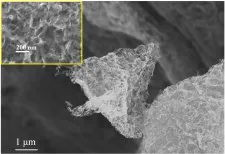 a
(a) 3D graphene froth from SiC decomposition
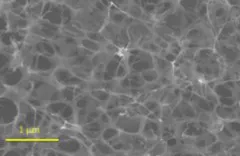 b
(b) Foam-like graphene scaffold
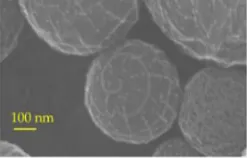 c
(c) Graphene nanospheres decorated with 5–10 nm quantum dots
03Three levels
Advances needed in materials, process and integration
- 01
Materials
Silicon can store about ten times more lithium than graphite (4,200 mAh g⁻¹), but it swells and cracks during cycling. GReenBatt embeds silicon nanocrystals below 10 nm in porous turbostratic graphene, which buffers the expansion and keeps the electrode conductive.
- 02
Process
A conventional electrode passes through mixing, slurry casting, drying and pressing. Here a laser decomposes a cheap precursor and deposits the active material directly onto the current collector, in air, without binders, conductive additives or solvents.
- 03
Integration
The process uses industrial-type lasers that already work over areas larger than 1 m², and is designed for a roll-to-roll pilot line and for digitally monitored, data-driven production.
04Targets
Benchmarked against the EU SET Plan for batteries
The project aims to reach, or come close to, the performance targets of the European Strategic Energy Technology Plan for two applications.
R&I Activity Fiche 1.1 · by 2030
Advanced Li-ion batteries for e-mobility
- 400Wh kg⁻¹
- > 750Wh l⁻¹
- > 700W kg⁻¹
- > 1,500W l⁻¹
- > 15,000cycles
R&I Activity Fiche 3.1 · by 2025
Hybrid Li-ion capacitors/batteries for stationary storage
- 40Wh kg⁻¹
- 12kW kg⁻¹
- > 1.5 Mcycles
05News
Latest from the project
Project website launched
The GReenBatt website is online, presenting the project's aims, work plan and team. Results, publications and events will be posted here as the project progresses.